MISSION · VALUES
Art is a fundamental human right, and culture belongs to all.
Our mission is to cultivate supportive spaces where artists can develop their talents, showcase their unique perspectives, and access ambitious opportunities in the creative sector.
STRANDS
ARC’s model of practice is grounded in extensive planning, including two Arts Council England-funded research and development projects and multiple person-centred consultations. This ensures that all activity is inclusive, responsive to artist needs, and designed to create meaningful, sector-wide impact.
The organisation’s approach directly addresses critical gaps within the cultural sector, particularly those created by the intersection of ableism, limited support for long-term, high-impact funding models, and the true cost of supporting hyper-marginalised artists with complex needs. Through this work, ARC is developing a sustainable, inclusive framework that challenges systemic barriers and supports lasting change.
Creative Youth Vision is ARC's youth-led vision, driven by a clear ambition for long-term change. Through various projects such as 'Made In Cov' and our 'Holiday, Activities and Food' programme, we aim to challenge and reshape the structural barriers that prevent disabled and neurodivergent young people from accessing creative careers by developing accessible pathways from education into the cultural sector.
We want to create the conditions where disabled young people have consistent access, clear communication, predictable environments, and meaningful influence—because we believe this enables confident participation, the development of creative identity, and full engagement in cultural life. At ARC, we aim to embed these principles through a supported studio model grounded in trust, anti-ableism, and genuine creative ambition, where young people are recognised and supported as artists.
This work is focused on those who are most often overlooked: disabled and neurodivergent young people, including those with complex communication and support needs. Our ambition is to build a programme that not only supports creative development across disciplines such as combined arts, sound, digital media, and movement, but also opens up understanding of how cultural organisations operate—and how young people can influence them.
Central to this ambition is co-design and agency. We aim to create a youth strand where young people shape what happens at every stage: from session design to governance, from access planning to partnership working. By supporting partners to listen and adapt in response, we seek to reduce barriers and build more inclusive, sustainable pathways into the arts.
Art Riot Collective (ARC) provides advocacy and support within the creative ecology for disabled and neurodivergent artists, developing structured pathways for progression and embedding inclusive practices throughout its studio model.
Working with a cohort of 22 disabled artists, many with high support needs and alternative communication methods, ARC addresses systemic barriers to funding, visibility, and career development. Through specialist training in areas such as photography and sculpture, artists are supported to develop their skills, build professional portfolios, and create documented legacy materials that strengthen their career opportunities.
ARC’s programme is rooted in artist-led development, enabling participants to facilitate workshops, pursue curatorial ambitions, and secure independent commissions and exhibitions through continuous professional development and knowledge exchange. Exhibitions curated in collaboration with Christopher Samuel and Aiden Moseley further embed disabled-led curation within the wider cultural sector.
The organisation adopts a person-centred approach, incorporating tools such as Makaton, assistive communication devices, and visual storytelling to ensure accessibility for non-verbal and minimally verbal artists. Evaluation methods include sensory, visual, and digital formats, alongside occupational therapy-informed approaches that recognise the value of creative practice in individual development.
ARC works in partnership with local authorities, cultural institutions, and an oversight board with lived experience to strengthen sector connections and advocate for systemic change. Training programmes for partners, including galleries such as the Mead Gallery, extend ARC’s inclusive model into wider, traditionally exclusionary spaces.
As it evolves, ARC is expanding its provision as a supported studio, exhibition space, and national networking platform—creating sustainable, artist-led pathways that respond directly to the needs of disabled and neurodivergent artists while challenging ableist structures across the arts sector.
Art Riot Collective (ARC) is developing its gallery programme through curatorial mentorship schemes and the creation of ARC’s Curatorial Manifesto, embedding disabled-led curation at the heart of its practice. Artists-in-residence work collaboratively with disabled artists alongside curators Christopher Samuel and Jennifer Gilbert, supporting inclusive and critically engaged exhibition-making.
The launch of ARC’s gallery space will increase visibility for the collective and its network of artists, fostering greater awareness and appreciation of disabled art both locally and nationally. ARC is also working with Christopher Samuel and Aiden Moseley to curate exhibitions that strengthen representation and leadership of disabled curators within the sector.
A dedicated curatorial programme, in partnership with Jade French, Jennifer Gilbert, and national gallery partners, supports disabled curators to lead exhibitions. Paid artist roles within ARC’s structure further promote autonomy and financial sustainability.
To enable full participation in creative practice, ARC provides specialist, fully accessible gallery and studio facilities. Recent funding from the Clothworkers’ Foundation and a West Midlands Combined Authority SME Capital Grant has supported the installation of a Changing Places facility, including a hoist and changing table, significantly enhancing accessibility. This investment has also contributed to the development of ARC’s digital archive provision.
ARC’s digital programme focuses on documenting and amplifying artists’ journeys through accessible and inclusive platforms. This includes the development of digital archives, artist portfolios, and the collection of both digital and in-person audience feedback, such as exhibition responses, experiential evaluations, and embedded web forms.
Digital marketing and live events further support the promotion of artists’ work through exhibitions, artist reflections, and a professional film that captures ARC’s impact. Experiential evaluation methods prioritise sensory, visual, and participant-led feedback, while a digital archive and film output share ARC’s model and best practice across the sector.
Recognising that many digital platforms present accessibility barriers, ARC is implementing inclusive solutions such as NEO archiving tools, enabling artists to document their creative journeys in personalised and accessible ways. A dedicated digital portfolio system supports artists to showcase their work to national and international audiences.
In collaboration with Coventry MA students, ARC is also exploring emerging technologies—including Augmented Reality (AR), Mixed Reality (MR), and Virtual Reality (VR)—to expand access and engagement. This work will create a virtual archive of past exhibitions, workshops, and residencies, alongside immersive, interactive experiences that centre artists’ lived experiences.
Together, these approaches aim to extend access to art beyond physical spaces, increase the visibility of disabled artists, and use technology to create new, inclusive ways to make, share, and experience creative work.
Art Riot Collective (ARC) advocates for increased visibility and representation of hyper-marginalised disabled and neurodivergent artists, amplifying their voices and supporting autonomy in creative and curatorial practice. Over the past three years, ARC has developed a responsive model that centres co-design, ensuring artists actively shape programmes, structures, and decision-making processes.
Through local and national training programmes, ARC creates developmental opportunities for artists, allies, institutions, galleries, and educational settings. This work supports the growth of disabled leadership within the arts, diversifies cultural ecologies, and drives systemic change. As part of this trajectory.
ARC’s approach is underpinned by occupational therapy-informed methodologies, which challenge structural inequalities and embed creative practice within wider social and care frameworks. Strengths and needs assessments—developed in partnership with Coventry City Council Commissioning and Central England Law Centre—ensure that artistic development is integrated into social care planning. Trainee occupational therapists provide tailored support, enabling sustainable and meaningful participation.
The organisation maintains strong relationships with supported studios, local authorities, and national partners to develop place-based solutions and advocate for sector-wide change. Research and development activity captures artists’ aspirations and informs future planning, highlighting a demand for increased opportunities in facilitation, collaboration, and exhibition-making. ARC also shares its model through internal and external training initiatives, contributing to broader sector learning.
National consultation and partnerships, including work with Jade French and collaboration with Sense, support the development of inclusive governance structures and alternative approaches to arts education. These initiatives strengthen ARC’s oversight board, ensuring leadership is rooted in lived experience.
ARC’s Oversight Board provides strategic guidance and accountability, ensuring that all activity remains artist-led and aligned with the organisation’s mission and long-term development. Regular board reviews support informed decision-making, sustainable growth, and the continuous evolution of ARC’s programmes.
Comprised of individuals with lived experience alongside sector leaders, the Oversight Board plays a vital role in strengthening connections across the cultural ecology. It fosters collaboration, builds partnerships, and supports ARC in advocating for systemic change while maintaining a strong, inclusive governance structure.
ARC’s network is built through a multi-layered engagement strategy that connects peer, participant, and public audiences, strengthening visibility, participation, and sector influence. This approach includes networking, training, consultation, and public exhibitions, positioning ARC within wider creative and advocacy networks.
Regular initiatives such as the ‘Third Thursday’ social and networking events provide monthly opportunities for artists and allies to connect, share experiences, and engage in critical dialogue. Themed sessions, including discussions such as “What do we want?”, centre collective voice, advocacy, and community-led action.
ART RIOT TIMELINE
Ismatjahan Ravat – Artist Development & Residency March 2026
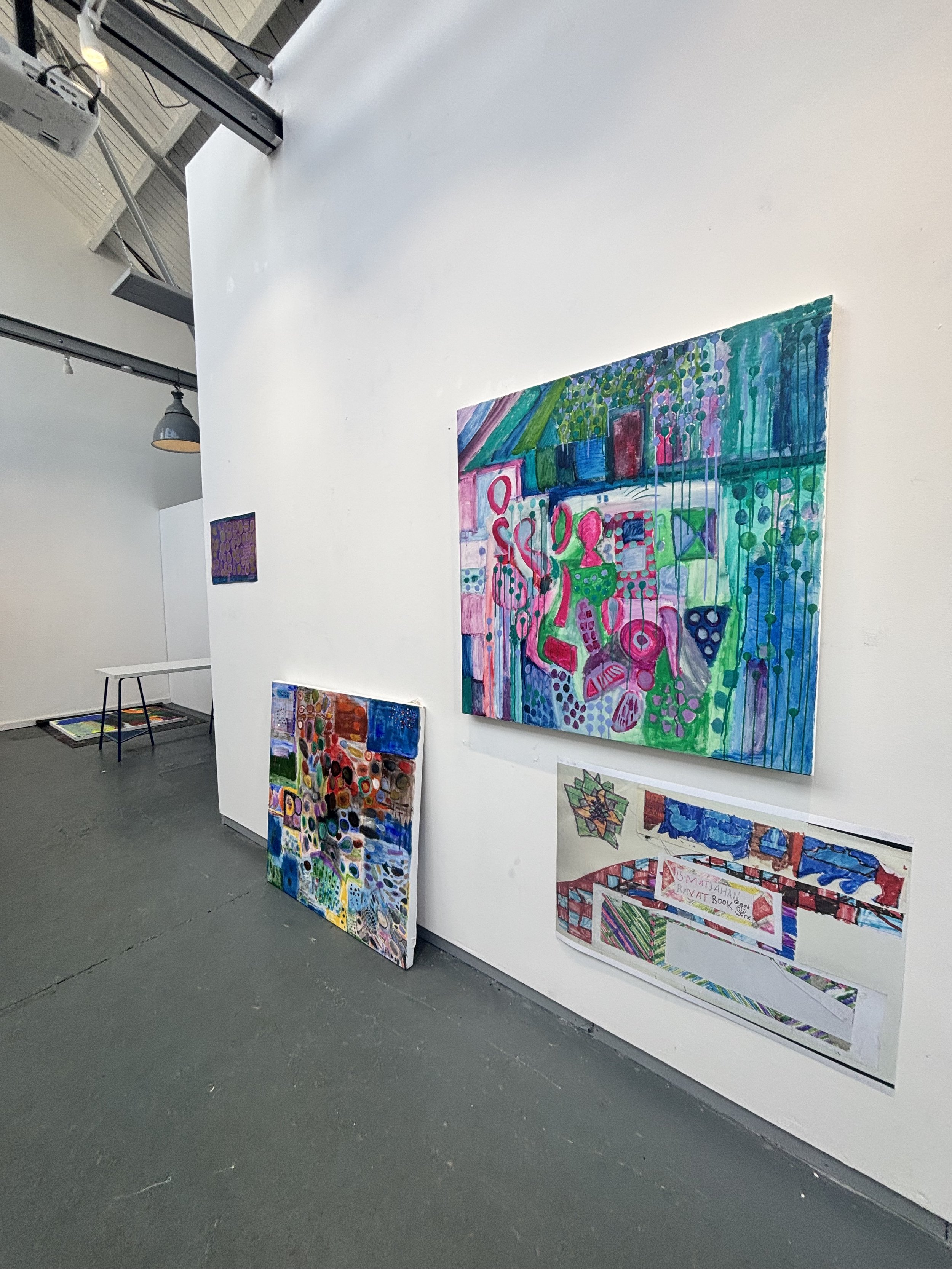
Ismatjahan Ravat is a Coventry-based visual artist working across painting, textiles, collage, and printmaking. As a non-verbal artist, their practice provides a vital means of expression, using layered patterns, texture, and colour to communicate ideas and experiences beyond words.
Currently developing their curatorial practice in preparation for a first solo exhibition, Ismatjahan continues to expand their work through experimentation with materials, including screen printing and other print techniques. Their richly detailed paintings often draw inspiration from textiles and garments, resulting in tactile and visually intricate works.
A member of Art Riot Collective for over three years, Ismatjahan has benefited from accessible studio space and support, enabling the creation, storage, exhibition, and sale of their work. This has been instrumental in their ongoing artistic and professional development.
Key Moments
2025: Work acquired by Rugby Art Gallery and Museum
September 2025: Group exhibition at Rugby Art Gallery and Museum
February 2026: Art Works Together exhibition, Millennium Gallery, Sheffield
2026: ACE-supported residency with Art Riot Collective
This residency has been made possible through the generous support of Arts Council England and marks a significant step in the continued growth of Ismatjahan’s practice.
Joe Patrick – Solo Exhibition & Practice Development (2025–2026)
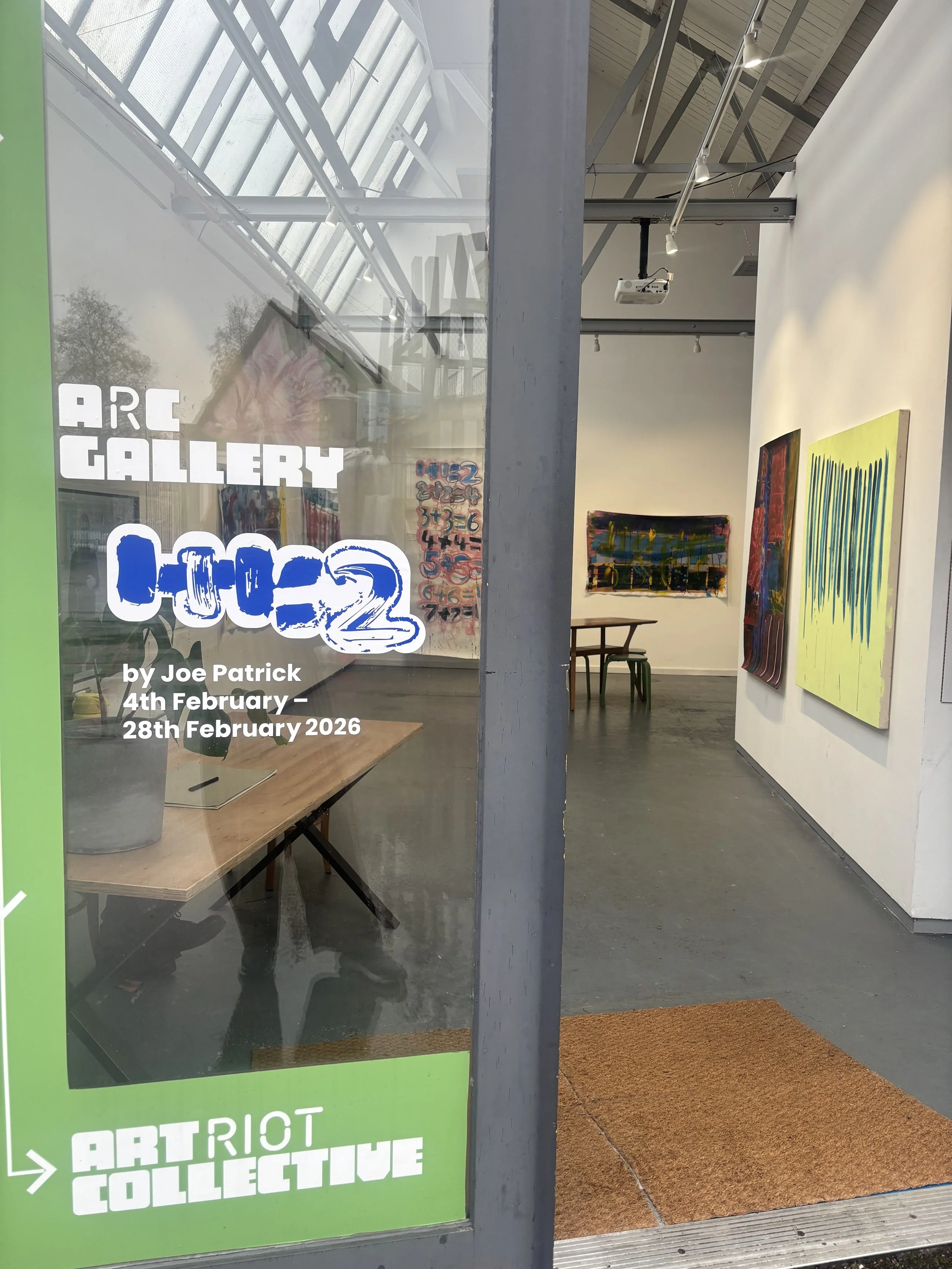
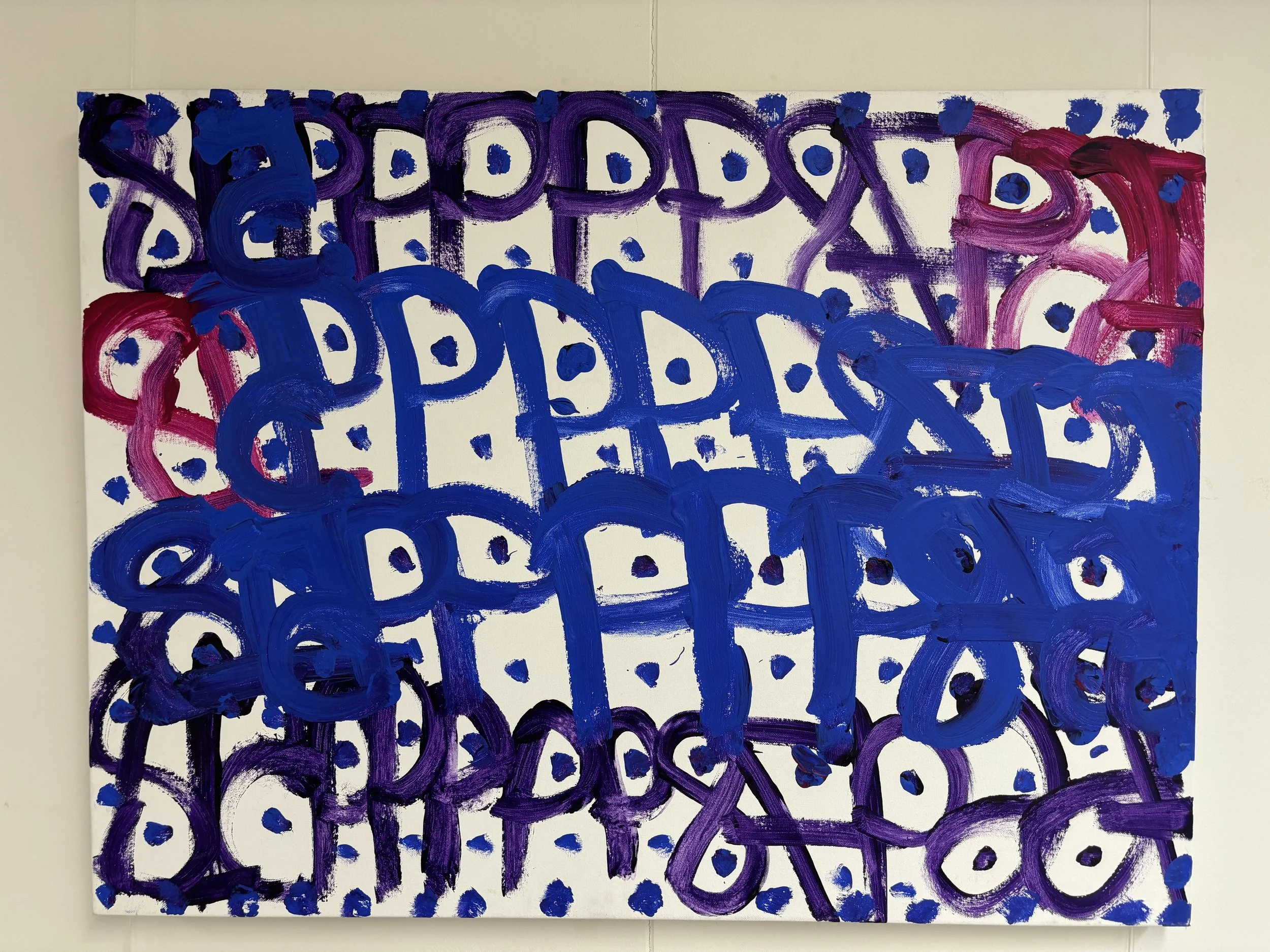
Joe Patrick presented his first solo exhibition at ARC Gallery, bringing together a series of abstract paintings developed in late 2025. His work explores mathematical equations through bold colour, translating structured systems into large-scale abstract compositions.
More recently, Joe has expanded his practice into large-scale collage, reworking these equations into collaborative pieces. His creative process is performative, often accompanied by the recitation of rhymes and songs, expressing joy and rhythm as part of the making process.
Ismatjahan Ravat – Acquisition, Rugby Art Gallery and Museum (2025)
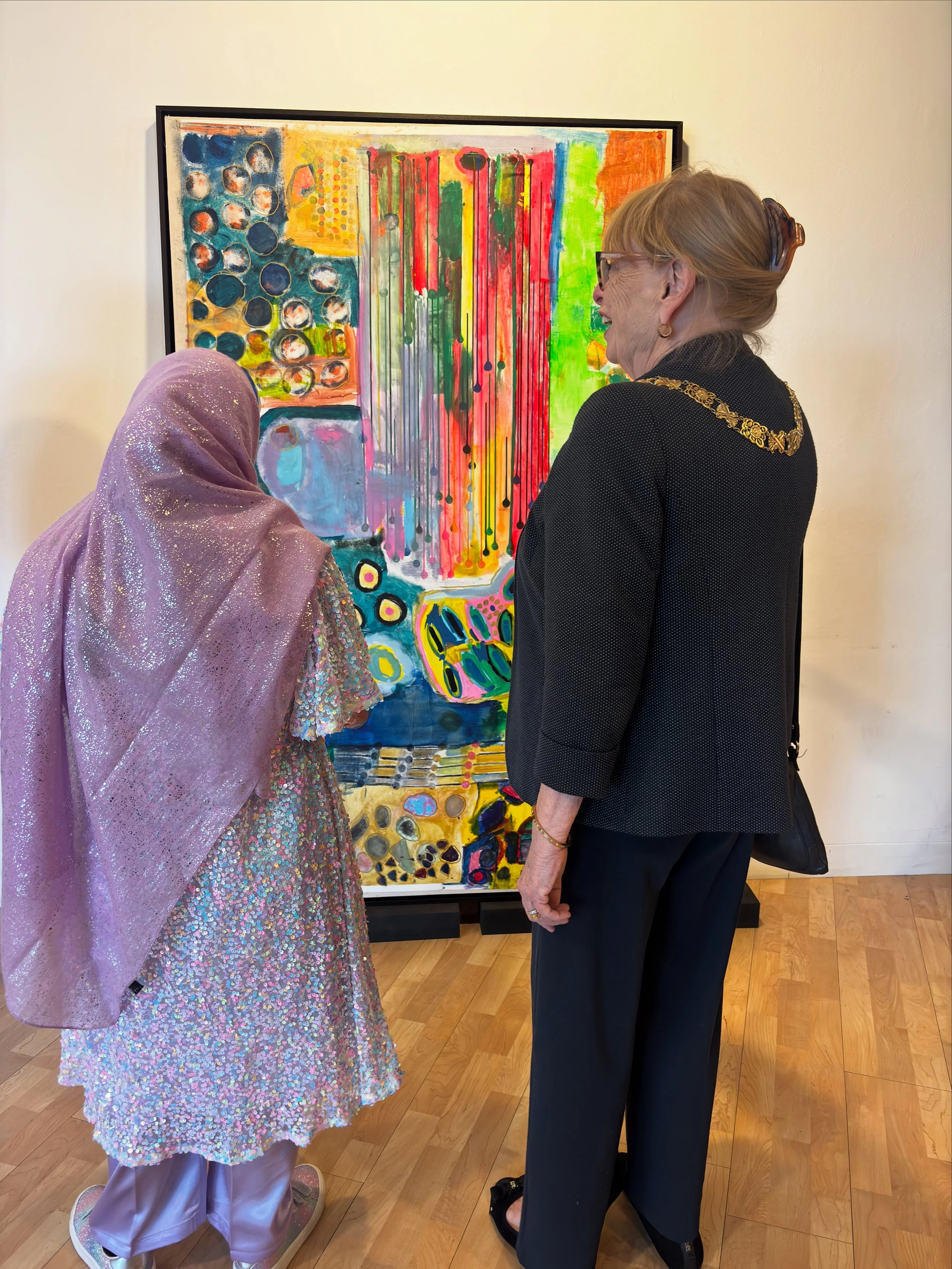
A significant milestone in Ismatjahan Ravat’s career was the acquisition of their work by Rugby Art Gallery and Museum in 2025. The large-scale piece was developed at the Art Riot Collective studio between 2024 and 2025, created over a series of supported studio sessions exploring pattern, texture, colour, and movement. The complexities of Ismatjahan’s painting techniques and the way they build their works in layers is phenomenal.
Ismatjahan, a Coventry-based non-verbal artist, works across painting, textiles, collage, and printmaking. Their practice uses layered imagery and material exploration as a vital form of expression, communicating ideas and experiences beyond words.
As a member of Art Riot Collective, access to an inclusive studio environment has been instrumental in supporting the creation, exhibition, and recognition of their work, contributing to both artistic and professional development. This work will be exhibited as part of #TheFullStoryOfTheRugbyCollection in February 2025—definitely worth seeing!
Key Moments
2025: Work acquired by Rugby Art Gallery and Museum
September 2025: Group exhibition at Rugby Art Gallery and Museum
February 2026: Art Works Together exhibition
2026: Arts Council England-supported residency
Niall Singh – Coventry Biennial Exhibition (Oct 2025 – Jan 2026)
Neurodivergent artist Niall Singh exhibited work at ARC Gallery as part of the Coventry Biennial. His multidisciplinary practice spans collage, assemblage, printmaking, textiles, poetry, music, and discussion, often exploring ways to break down social barriers to art and education.
During this period, Niall led a series of workshops with Art Riot Collective artists and members of the public, sharing his processes and approaches, including zine-making and reinterpreting traditional folk music.
Symposium – Home-Based Creative Practice (September 2025)
Inspired by The Severed Wing’s artist–gallery collaboration, this symposium brought together artists, producers, and organisations to explore the possibilities and challenges of home-based and situated creative practice.
Grounded in the Social Model of Disability, the programme encouraged reflection on access, care, and sustainability—raising important conversations about how cultural spaces can become more inclusive for artists and audiences confined to the home due to disability or long-term illness, and how artistic practices can meaningfully respond to lived experience.
Curated by LOWRY in collaboration with Corinne, DASH (Disability Arts in Shropshire), and Art Riot Collective—with contributions from Attenborough Arts Centre and Compton Verney. The live performance at ARC Gallery transformed the space into an intimate performance venue which replicated a small low lite cinema. It created connection to the work and invited audiences to engage with home-based artist Corinne Q&A.
This Is Me – AR Exhibition, Coventry
This Is Me was a free outdoor exhibition using augmented reality (AR), created by disabled artists from Art Riot Collective in partnership with Coventry University’s Disabled Staff and Carers Network.
Transforming Broadgate Square into an open-air digital gallery, audiences could experience artworks through smartphones or tablets, encountering large-scale and immersive pieces within the public space.
The project enabled artists to share their stories and curate work in innovative ways, while challenging perceptions of access, authorship, and inclusion in public art. It formed part of a wider ARC initiative exploring AR as a method for creating and exhibiting work.
The project was supported by Coventry City Council and funded by Arts Council England.
Aleighan – Solo Exhibition, ARC Gallery (April–May 2026)
Art Riot Collective artist Aleighan launched a solo exhibition at ARC Gallery, supported by an Arts Council England Developing Your Creative Practice (DYCP) award.
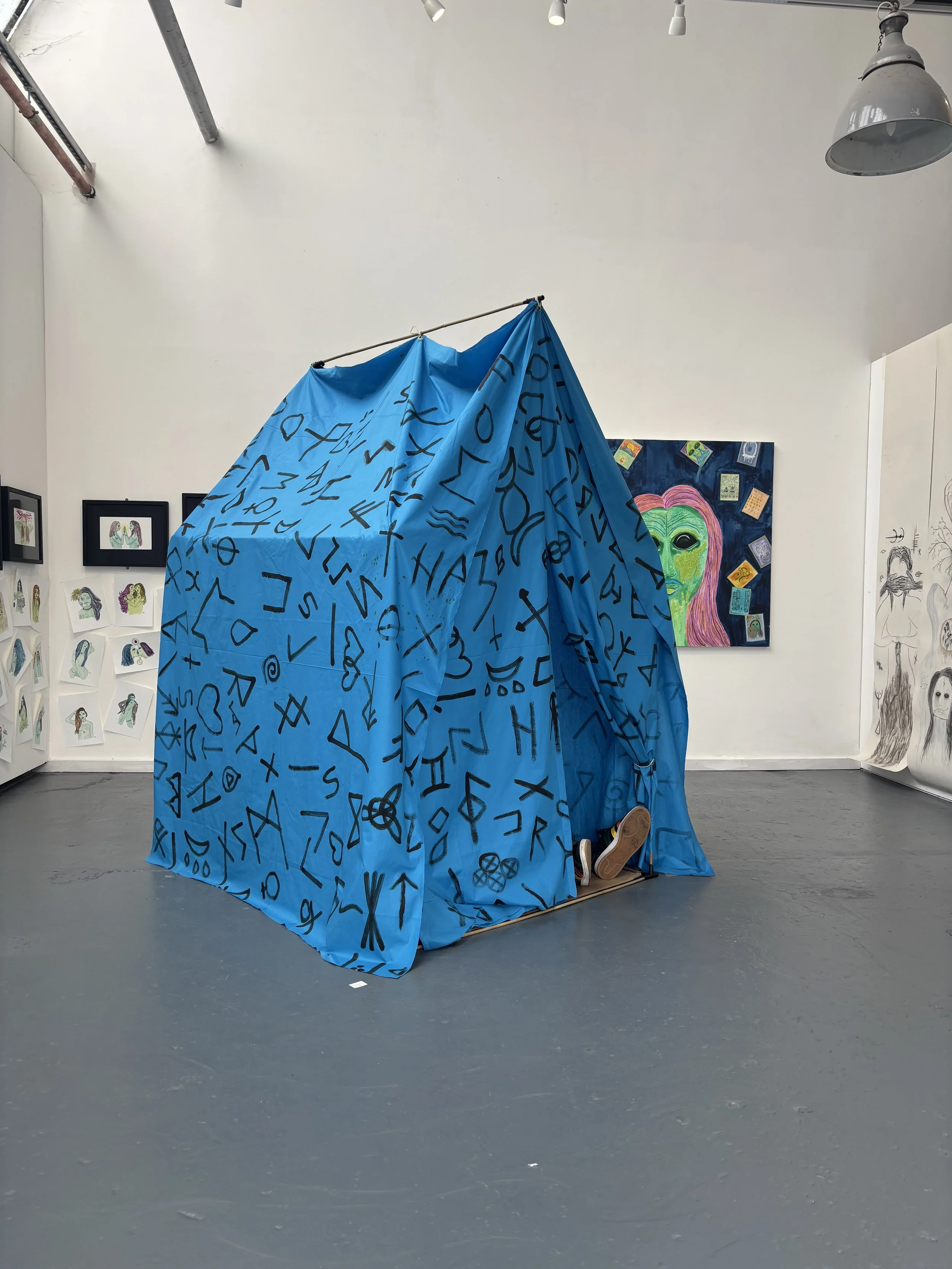
The exhibition reflects a period of exploration and growth, with the artist expanding their practice through experimentation with new methods and materials. The work explores how Aleighan interprets language and information, and how this can lead to confusion and misdirection. Through the creation of character-based works, the artist poses questions around personal experience and the challenges of navigating an ableist world.
Made in Cov – Young People’s Creative Project
Made in Cov was a youth-focused project supporting young people from across Coventry to explore creative practice and gain insight into the range of roles involved in performance and exhibition-making.
Participants engaged in a series of workshops, experimenting with new creative methods before collaboratively developing and touring a live performance to multiple venues. The young people took on leading roles across all aspects of the project, including performance, lighting, and filmmaking.
The project was funded through a grant awarded to Art Riot Collective by the West Midlands Combined Authority, supporting the development of emerging creative talent in the city.
In 2024, MunKyle undertook a deeply personal and transformative project, creating his first album and live performance through Arts Council support. Initially driven by fear and self-doubt, the process evolved into a powerful act of honesty, exploring themes of disability, neglect, suicide, and lived experience. Collaborating with other creatives, MunKyle embraced a more expressive and authentic voice, challenging internalised ableism and redefining his identity as an artist. The work combined music, painting, and performance, with a raw and emotive approach that prioritised truth over perfection. His live performance in Coventry marked a pivotal moment, where accessibility, audience care, and vulnerability were central to the experience. The response from audiences was profoundly affirming, reinforcing the value and impact of his work. This project not only validated MunKyle’s artistic practice but also marked the beginning of an ongoing commitment to creating bold, honest work and performing in spaces that have historically excluded artists like him.
Ismatjahan Ravat – Commission, City of Coventry Health Centre
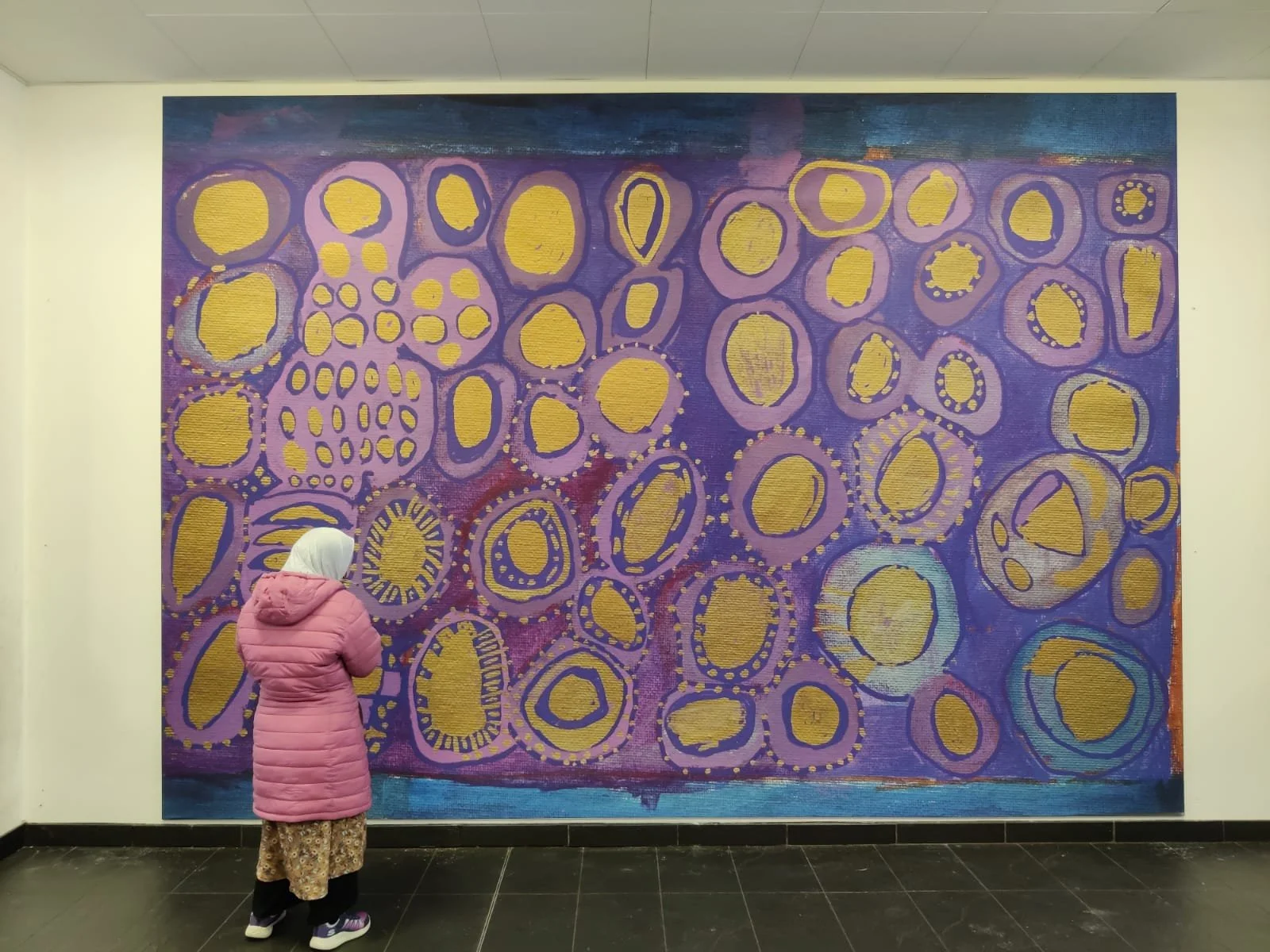
Ismatjahan Ravat was commissioned to create a site-specific artwork for the City of Coventry Health Centre. The work responds to the building’s existing colours, patterns, and textures, alongside references to Coventry’s industrial heritage, including watchmaking, the car industry, and radio production.
Drawing on photographic research of artworks and interiors within the space, Ismatjahan developed an abstract painting in the Art Riot Collective studio. The final piece was scaled to an 8m x 5m wall installation, now prominently situated in the health centre’s foyer.
The commission demonstrates a thoughtful and engaging response to both the architectural environment and the cultural history of Coventry.
Art Riot Collective – Response to Jason Wilsher-Mills Exhibition (June–September 2024)
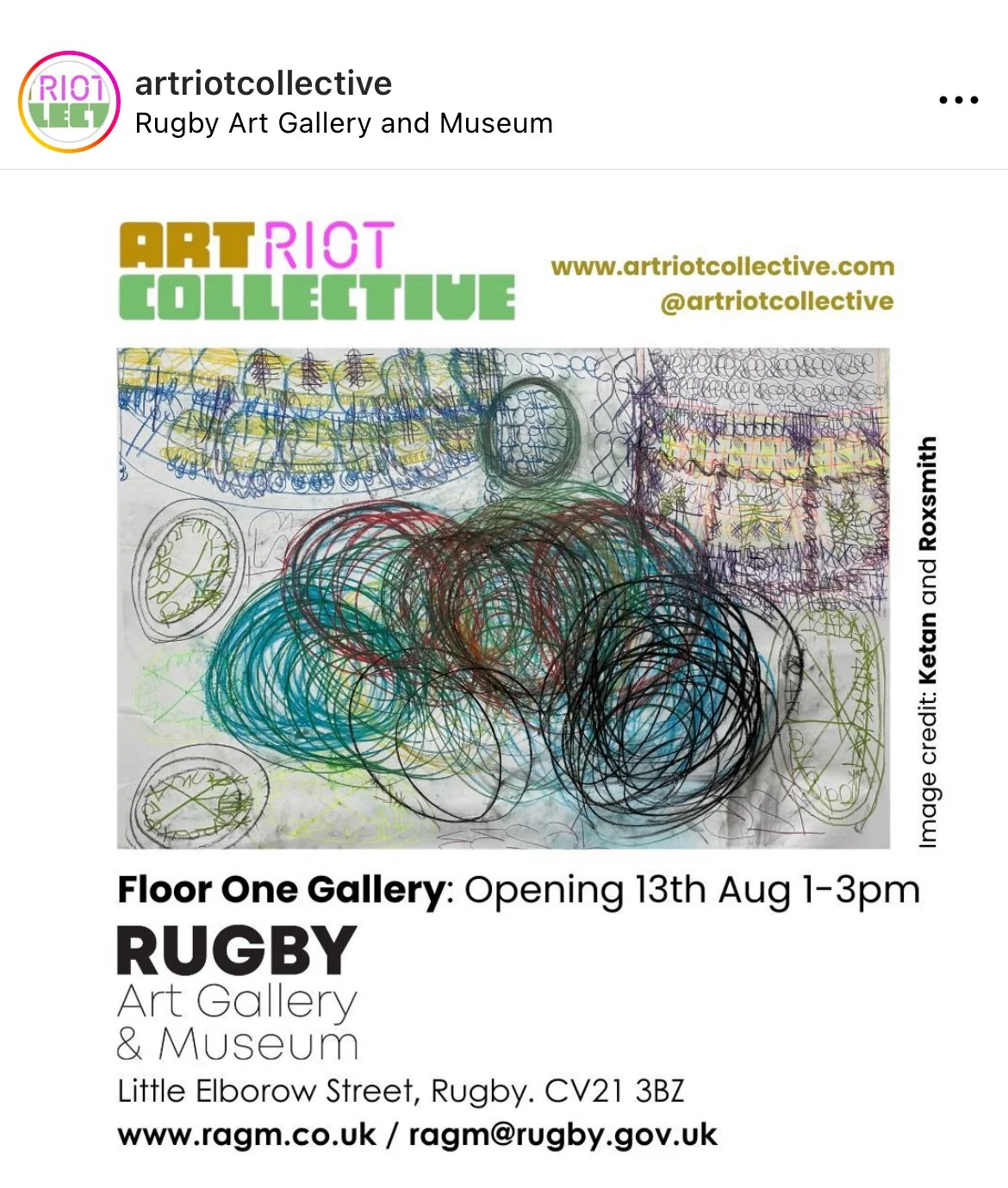
Art Riot Collective artists developed a group exhibition in response to Jason Wilsher-Mills: The Super Cool Digital Artist! at Rugby Art Gallery and Museum (22 June – 7 September 2024).
Artists including Ismatjahan Ravat, Ketan Mistry, Roxsmith, Bryony Line, Richard Raponi, Joe Patrick, Steven Willis, Johnathan, Bryn McKay, Tony Atkins, Darren, Corinne, Colleen, and Bri exhibited work inspired by Wilsher-Mills’ vibrant, technology-driven practice.
His work—spanning digital imagery, sculpture, and interactive elements, and rooted in personal experience, pop culture, and disability—encouraged ARC artists to explore bold colour, storytelling, and new approaches to making, reflecting on their own narratives and creative processes.
Originally trained in oil painting, Wilsher-Mills transitioned to digital media following disability, building an internationally recognised practice, with exhibitions at major institutions including Tate Modern and the V&A, and as recipient of the Adam Reynolds Award (2020).
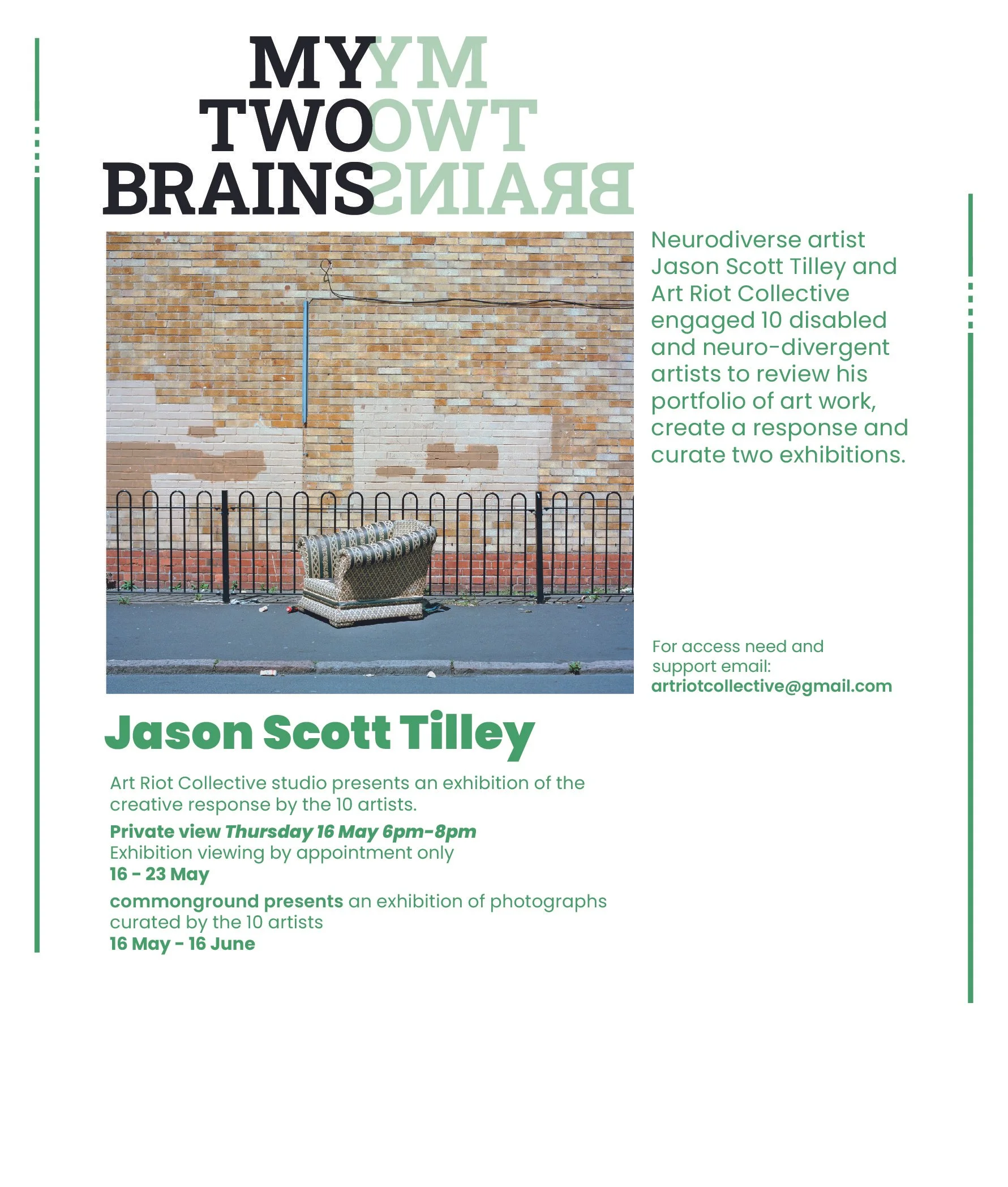
My Two Brain; Jason Scott Tilley. ARC has received national media coverage for a major project supported by Arts Council England and partners, including features on BBC Newsnight and local BBC radio.
ARC’s mission is to challenge the narrative around disabled and neurodivergent artists by supporting their recognition within the art world, breaking down barriers, and creating new opportunities.
The project, My Two Brains by Jason Scott Tilley, brought together ten artists from the Coventry-based organisation Art Riot Collective (ARC) to respond creatively to his photographic archive.
Paintings, prints, and poetry developed through the project were exhibited at a contemporary studio dedicated to supporting neurodivergent and disabled artists. The work explores Tilley’s archive as a photographer diagnosed with early-onset dementia, with access and care shaping the project’s approach. The artists’ responses offer new perspectives on memory, authorship, and lived experience.
Roxsmith awared a devleoping creative practice grant from Art Council England.
Roxanne’s award focused on three key areas. Firstly, it explored access to a suitable studio space that enabled her to revisit and develop work over time, supporting a more sustained creative process.
Secondly, it guided engagement with the wider art world and strengthen her practice. Then Roxsmith took this experience and worked alongside an experienced artist—particularly an emerging Black female artist was identified for this role to support Roxsmith own identity as a balck woman. This supported Roxsmiths deepen of her learning, confidence, and critical reflection.
Finally, Roxsmith collaborated with an arts devleopment worker from Art Riot Collective who provided valuable guidance and help expand her creative skills in an accessible and inclusive way adapting processes and the environment.
This grant gave Roxsmith the foundation of her practice which she contonues to grow, helping establish her identity as an artist.
Artist Development – ActionSpace Visit, London
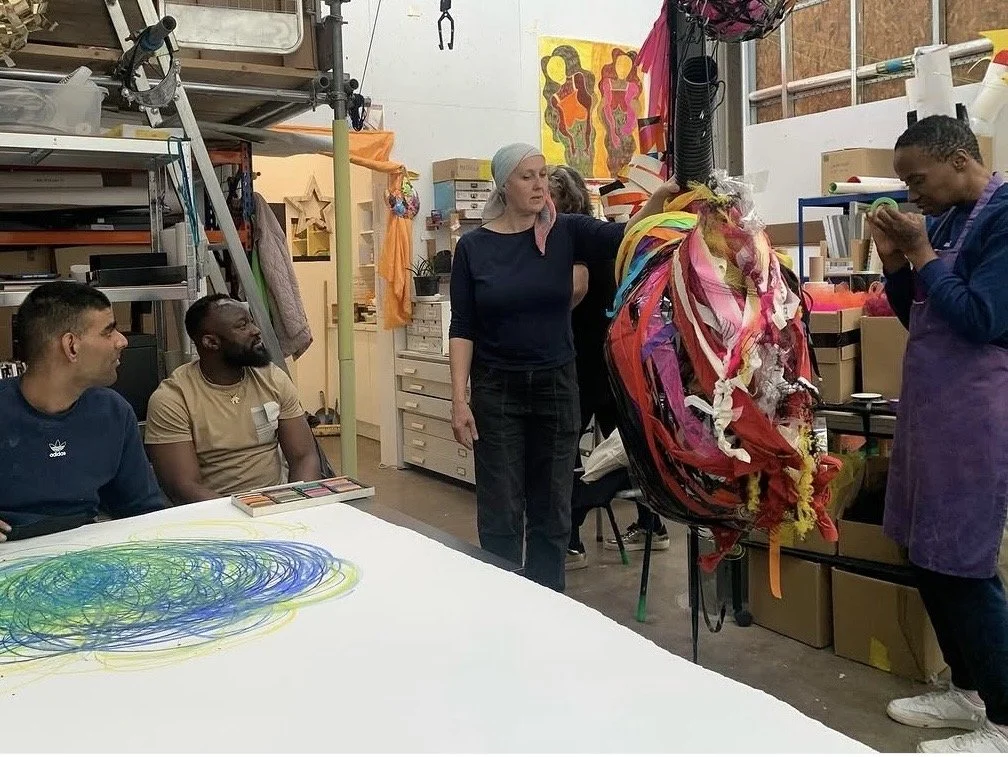
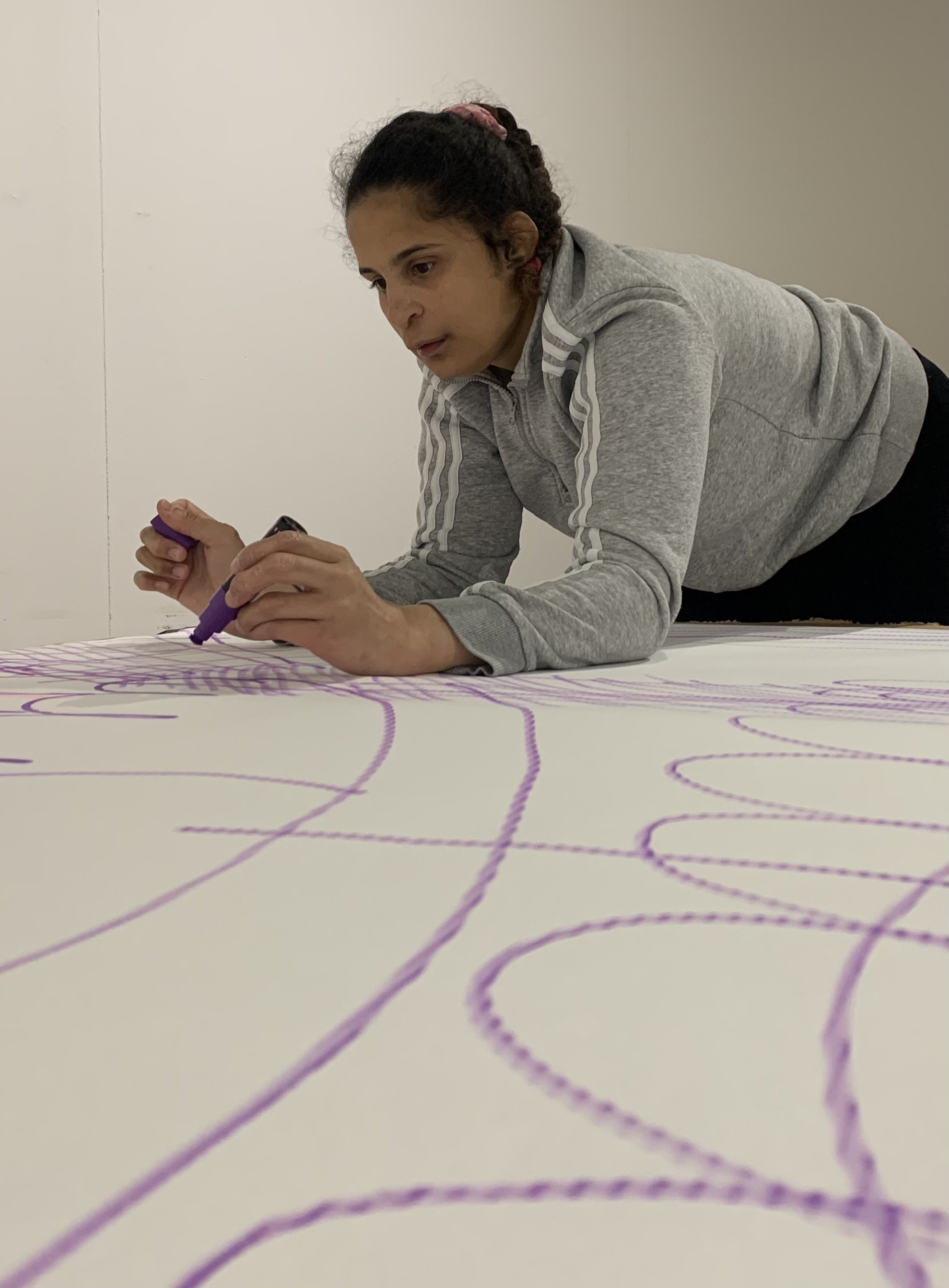
As part of Ketan’s artistic development, Art Riot Collective facilitated a visit to ActionSpace in London, enabling him to work alongside artist Nnena Kalu. This opportunity followed Ketan’s engagement with Kalu’s work at MK Gallery, where strong parallels were identified in their approaches to abstract painting through repetitive movement, colour, and rhythm.
During the visit, both artists worked simultaneously, drawing inspiration from one another through shared gestures, colour palettes, and mark-making processes. This exchange supported Ketan in developing new work while fostering a collaborative and reflective environment.
The experience highlights Art Riot Collective’s commitment to creating meaningful opportunities for disabled and neurodivergent artists to connect, learn from one another, and contribute to a more inclusive and evolving artistic landscape.
Roxsmith awared a devleoping creative practice grant from Art Council England.
Roxanne’s award focused on three key areas. Firstly, it explored access to a suitable studio space that enabled her to revisit and develop work over time, supporting a more sustained creative process.
Secondly, it guided engagement with the wider art world and strengthen her practice. Then Roxsmith took this experience and worked alongside an experienced artist—particularly an emerging Black female artist was identified for this role to support Roxsmith own identity as a balck woman. This supported Roxsmiths deepen of her learning, confidence, and critical reflection.
Finally, Roxsmith collaborated with an arts devleopment worker from Art Riot Collective who provided valuable guidance and help expand her creative skills in an accessible and inclusive way adapting processes and the environment.
This grant gave Roxsmith the foundation of her practice which she contonues to grow, helping establish her identity as an artist.
Art Riot Collective presented a group exhibition at Rugby Art Gallery and Museum, featuring work by Roxsmith, Colleen, Steven, Corinne, Bryn, Lee Pritchard, Bryony Line, Joe Patrick, Matthew Wigmore, Ismatjahan Ravat, Darren Endicott, MunKyle, Joshua Clarke, Ketan Mistry, and Tony Atkins.
The curated abstract exhibition showcased recent works by the artists, including a large-scale piece that launched the gallery’s balcony space. A prominent work by Roxsmith defined the entrance, creating a striking and welcoming introduction for visitors.
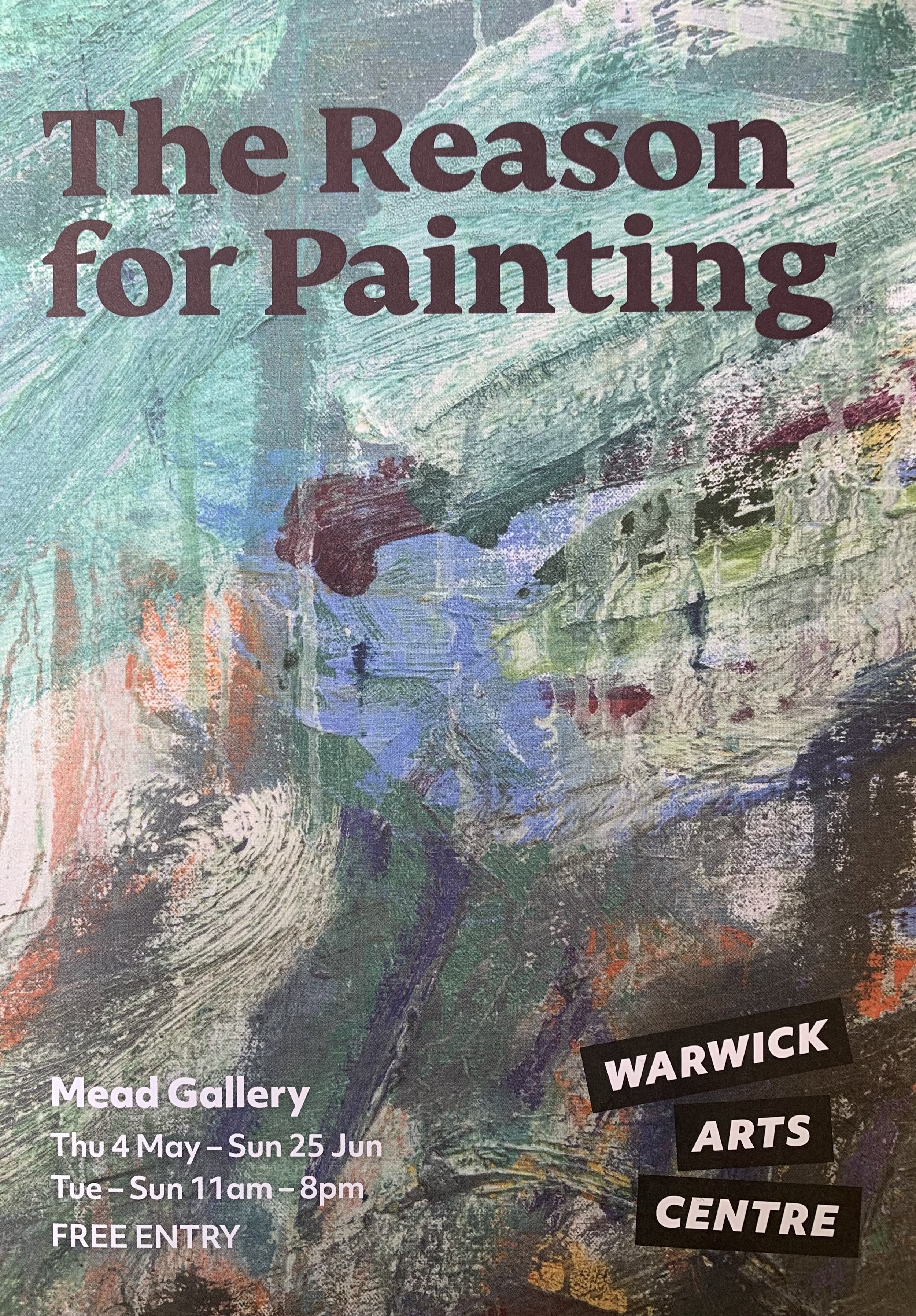
The Reason for Painting – Mead Gallery Warwick Arts centre
The exhibition profiled a diverse group of emerging artists united through their exploration of colour and paint, using abstraction to reflect on contemporary life.
The Reason for Painting drew inspiration from the University of Warwick’s founding art collection,
Art Riot Collective artists Roxsmith, Bryony Line, Richard Raponi, Matthew Wigmore, and Ketan Mistry were featured in the exhibition. Alongside this, Mead Gallery created a replica of Art Riot Collective’s studio space, inviting both artists and members of the public to make work that was displayed as part of the exhibition.
Art Riot Collective also developed accessible interpretation and guidance, ensuring the space was inclusive and accessible to all audiences.
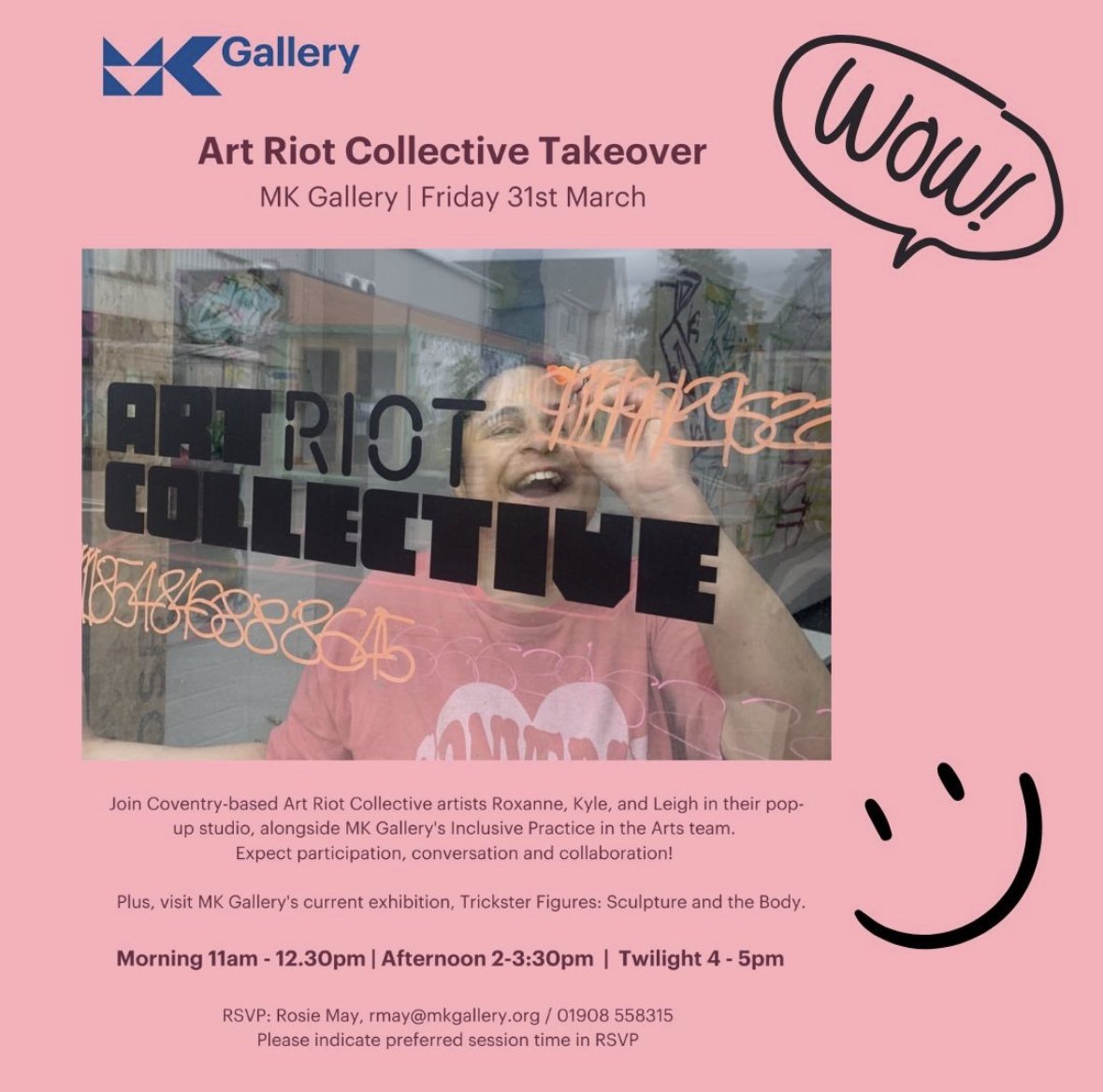
Art Riot Collective was invited to take over the MK Gallery workspace, sharing its approach through the practices of three collective artists. Roxsmith, Aleighan, and MunKyle exhibited their work and offered insight into their creative processes, emphasising the importance of enabling artists to develop their own methods and ensuring accessible ways of working.
SUPPORT · PARTNERSHIPS
Art Riot Collective (ARC) thrives through the support of individuals, communities, and organisations who share a commitment to inclusive, artist-led practice. By volunteering, donating, or forming a partnership with ARC, you become part of a growing movement that champions disabled and neurodivergent artists, amplifies diverse creative voices, and challenges barriers within the arts sector.
Whether contributing time, resources, or funding, every form of support helps sustain accessible opportunities, nurture artistic development, and expand the reach of our work locally and nationally. Together, we can build a more equitable cultural landscape where all artists are valued, supported, and heard.
VOLUNTEERING
Volunteers play a vital role in supporting Art Riot Collective’s mission to empower disabled and neurodivergent artists. Opportunities include:
Gallery and Event Support:
Assisting with exhibitions, workshops, and live events at the gallery or online, including set-up, visitor engagement, and accessibility support.
Digital and Creative Support:
Helping with social media, photography, filming, archiving, or website updates to showcase artists’ work.
Peer Mentoring and Workshop Facilitation:
Supporting artists during creative sessions, helping with communication tools, or participating in co-created projects.
Volunteers gain experience in inclusive arts practices, develop new skills, and contribute directly to creating accessible and artist-led cultural experiences.
DONATING
Financial contributions help ARC maintain accessible facilities, fund specialist equipment, support artists’ creative practice, and expand digital and national engagement. Donations can be made:
One-off Contributions:
Supporting a specific project, exhibition, or piece of equipment.
Regular Giving:
Monthly or annual donations help provide sustainable funding for ongoing artist support, workshops, and residencies.
Sponsorship or Legacy Giving:
Partnering to sponsor exhibitions, training programmes, or leaving a legacy gift to support ARC’s long-term vision.
Donors and sponsors receive updates on the impact of their contributions, including artist stories, project outcomes, and invitations to gallery previews and special events.